

Modern Australian Heritage Design: Honouring the Past While Designing for Today
Modern heritage design is having a moment, but the term is often misunderstood according to Robyn Hawke – award winning, qualified and accredited designer from Inspired Spaces.
At its best, modern Australian heritage design is not about nostalgia, imitation, or freezing a home in time. It's about understanding the architectural language of the past and selecting artwork with enough confidence and restraint to allow it to coexist with the way we live today.
Heritage homes hold a quiet power. The proportions, craftsmanship, ceilings, timber floors, and weight of materials are the very reasons we're drawn to them. It's why we wander through historic homes on holidays or pause in older neighbourhoods, noticing the details that have endured. There is a sense of permanence and care embedded in these spaces, something modern construction often struggles to replicate.
While Australia's architectural history is young compared to Europe or the UK, our Victorian, Federation, Arts and Crafts, Art Deco and early mid-century homes still carry distinct character and intent. When renovated thoughtfully, they offer something rare: the richness of history paired with spaces that function seamlessly for contemporary life.
Modern heritage design sits in this balance. It respects what already exists, introduces new elements with purpose, and avoids imitation in favour of clarity. The goal is not to recreate the past but to design forward, without erasing it.
Understanding Australia's Architectural Heritage
Australia's heritage homes were designed with clear principles proportion, craftsmanship, and hierarchy. Understanding these origins is essential when making decisions that feel considered rather than reactive.
Victorian homes (c. 1840-1900) are defined by formality and decorative detail. Later examples feature ornate plasterwork, tessellated tiles, timber floors, and carefully composed facades, often with formal rooms positioned at the front of the home.
Federation and Edwardian homes (c. 1900-1915) marked the emergence of a distinctly Australian architectural identity, characterised by red brick exteriors, stained glass, wraparound verandahs, and long central corridors.
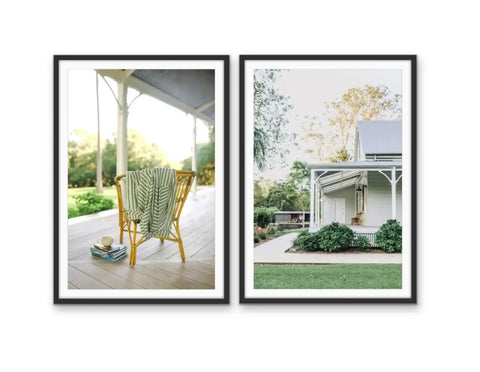
Arts and crafts and art nouveau movements of the early 1900s emphasised craftsmanship and honesty in materials, with handmade tiles, timber detailing, and decorative motifs playing a central role.
Californian bungalows (c. 1910-1930), adapted from the United States, favoured simplicity and comfort. Brick or rendered columns, weatherboard cladding, and restrained ornamentation gave rise to homes that were modest yet expressive.
Art deco homes (c. 1920-1940) introduced a more graphic, stylised approach, with geometric forms, curved facades, metalwork, and bold patterning.
Post-war and early mid-century homes (c. 1940-1960) shifted toward openness, cross-ventilation, and connection to the outdoors principles that continue to influence modern living today.
Each of these styles brings its own rhythm, scale, and material language. Successful modern heritage design doesn't replicate these elements it responds to them.
Core Artwork Selection Principles of Modern Heritage Design
Balance Old and New with Intention
Modern heritage design is not about imitation. New elements should be introduced with clarity and contrast, allowing both the original architecture and contemporary interventions to retain their integrity. Proportion, rhythm, and scale are critical, when respected, old and new sit comfortably together rather than feeling stitched together.
Here, the balance between old and new is achieved through restraint and scale. The original ceiling height and arched openings establish a strong architectural framework, while contemporary elements are introduced sparingly. The oversized artwork is intentionally positioned between the arches, using the architecture as a natural frame. Monochromatic furnishings and sculptural forms sit quietly within the space, allowing the historic proportions and soft light to remain the focal point
This principle extends beyond architecture to the way art is curated. In spaces with mid-century or Palm Springs influences, whether original or introduced through later extensions contemporary, mid-century artwork provides a deliberate counterpoint to heritage elements. Clean lines, considered geometry, and an optimistic palette allow these pieces to feel confident without overwhelming the original structure. When paired or grouped, repetition creates balance and scale, ensuring the artwork responds to the architecture rather than competing with it.
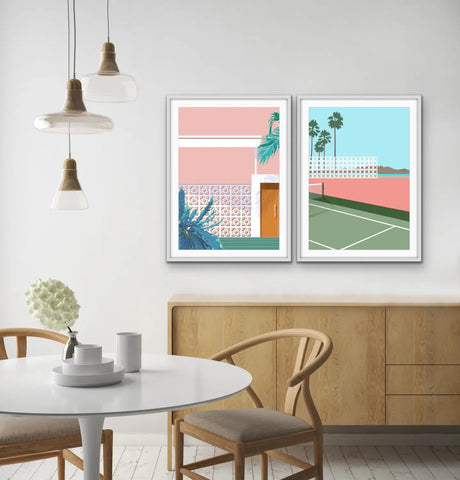
The result is contrast that feels purposeful, where modern elements acknowledge the past without imitating it, and heritage features remain legible within a contemporary context
Retain and Restore What Matters
Original features give heritage homes their identity. Where possible, elements such as cornices, ceiling roses, plasterwork, fireplaces, tessellated tiles, pressed metal ceilings, and decorative brickwork should be retained and restored. These features can continue to act as focal points even as their function evolves.
Create Continuity
Continuity allows a heritage home to feel resolved rather than fragmented. It is achieved through restraint a consistent colour palette, repeated materials such as timber, terrazzo, marble, or stone, and considered alignment between old and new spaces.
Artwork plays an important role in reinforcing this continuity. Botanical artworks, for example, support proportion and rhythm by working with repetition rather than dominance. Grouped together, they create the scale needed to sit comfortably within rooms with higher ceilings and generous wall heights, while their shared subject matter and restrained palette strengthen visual cohesion. This approach allows artwork to feel architecturally considered, integrated into the space rather than applied to it.
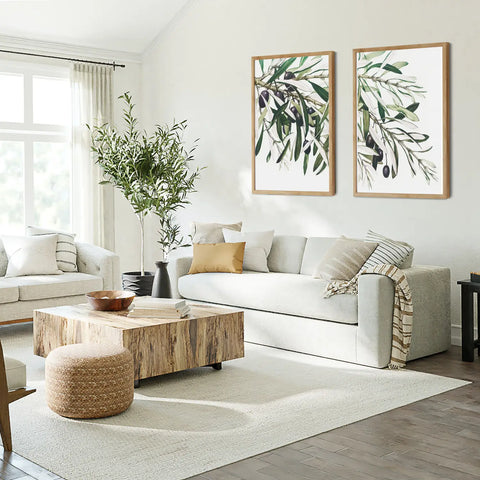
In Federation and Victorian homes, botanical artworks are particularly effective, as their detailed illustration and natural subject matter echo the craftsmanship and sensibility of the era, making them well suited to hallways, stairwells, formal dining rooms, or transitional spaces where proportion matters.
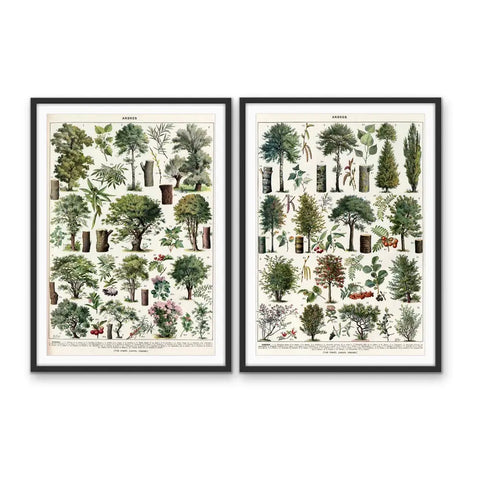
By working with repetition rather than dominance, botanical artworks strengthen visual cohesion and support a calm, connected flow from room to room.
Use Lighting as a Design Tool
Many heritage homes are naturally darker due to their original construction. Introducing light both natural and artificial is essential. Layered lighting, including ambient, task, and feature lighting, enhances functionality while highlighting architectural detail. Wall sconces should be embraced, with scale and finishes that respond to the home's original character.
Prioritise Function and Durability
Modern heritage design should never feel fragile. Homes must support contemporary life, using durable, low-maintenance materials and discreetly integrated modern services to maintain visual calm.
Strengthen the Indoor/Outdoor Connection
While many heritage homes were originally compartmentalised, new extensions provide opportunities to create connection to gardens and outdoor spaces. When handled carefully, these transitions enhance both the heritage and contemporary parts of the home.
Art in Modern Heritage Interiors
Art plays a quiet but powerful role in modern heritage interiors. More than decoration, it acts as a bridge connecting history with contemporary layers and introducing narrative, mood, and meaning.
In heritage settings, artwork often becomes the mediator between eras, softening contrast and helping modern interventions feel intentional rather than abrupt. The key is not volume, but discernment.
Choosing Artwork with Intent
The most successful artwork responds to the character of the architecture rather than competing with it. This connection may be found in colour palette, subject matter, materiality, or emotional tone.
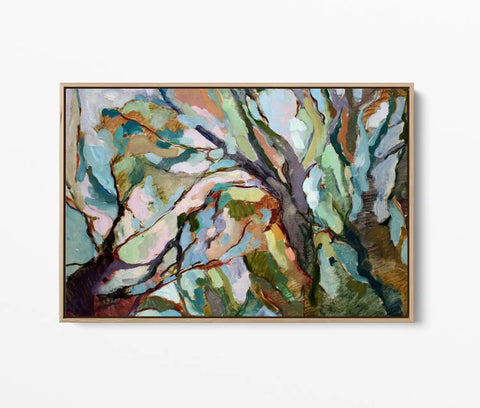
Abstract Australian landscapes, for example, can ground contemporary forms in familiar context, while vintage works, botanical studies, figurative pieces, geometric compositions, and art deco inspired prints often feel naturally at home in heritage settings due to their sense of craft and restraint.
Let Art Inform the Interior
In modern heritage homes, art can act as a starting point rather than a finishing touch. A single statement piece may inform a room's palette, materials, or mood. When artwork leads, other elements should respond quietly, allowing both the art and architecture to shine.
Displaying Art with Purpose
Gallery arrangements can work well when unified by palette or theme. Architectural framing, such as positioning artwork within alcoves, above fireplaces, or flanked by sconces reinforces the relationship between art and structure.
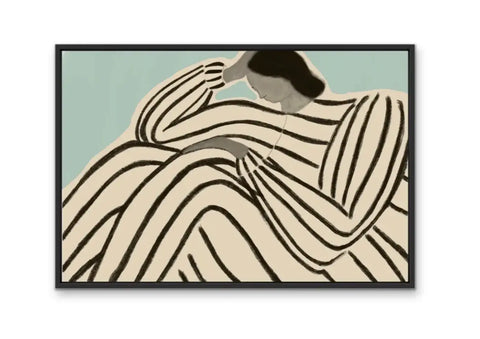
Negative space is equally important. Allowing walls to breathe gives artwork presence and authority
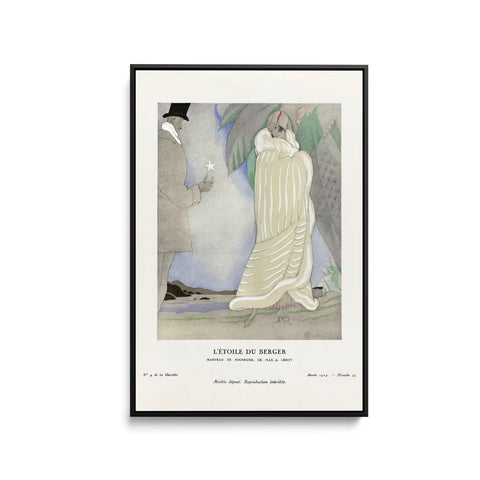
L'Etoile Du Berger by Charles Martin
This Charles Martin print works best when given architectural context. Positioned within an arched alcove, it becomes a focal point shaped by the surrounding form. When grouped with other prints from the series, repetition creates scale and rhythm, an approach particularly effective on larger living room walls where proportion matters more than ornament.
Framing, Scale, and Proportion
Traditional frames in gold, brass, or aged timber often suit heritage settings, particularly for smaller or detailed works. Contemporary framing can introduce contrast when used intentionally. Scale should always respond to the room and its architecture, oversized works benefit from restraint elsewhere, while smaller pieces gain impact through thoughtful grouping.
A Curated, Not Collected, Approach
Modern heritage design is ultimately about discernment.
Rather than filling every wall, consider where artwork can have the greatest impact. Fewer, well-considered pieces will always feel more resolved than accumulation without hierarchy.
When art is curated with intention, in scale, placement, and meaning it reinforces the home's history while confidently anchoring it in the present.
Modern heritage design is about knowing what to preserve, what to reinterpret, and where contrast strengthens rather than competes.
When approached with intention, heritage homes are not compromised by modern life, they are strengthened by it. Thoughtful planning, proportion, material selection, and curated use of art allow these spaces to feel layered, calm, and deeply liveable.
For period homeowners, this reframes the conversation entirely. You're not choosing between character and comfort, or history and relevance. With intelligent design and restrained confidence, it's possible to honour the past while creating a home that feels resolved, contemporary, and entirely present.
Leave a comment